Carry-on baggage

Knowing what you can bring on board helps make travel smoother. Review carry-on and personal item allowances, size restrictions and packing requirements before your trip. 


Carry-on baggage allowance

Most guests can bring one carry-on bag and one personal item onboard. Carry-on items must fit within the maximum size limits .

Items that exceed the size limits or allowance may need to be checked and applicable baggage fees may apply.

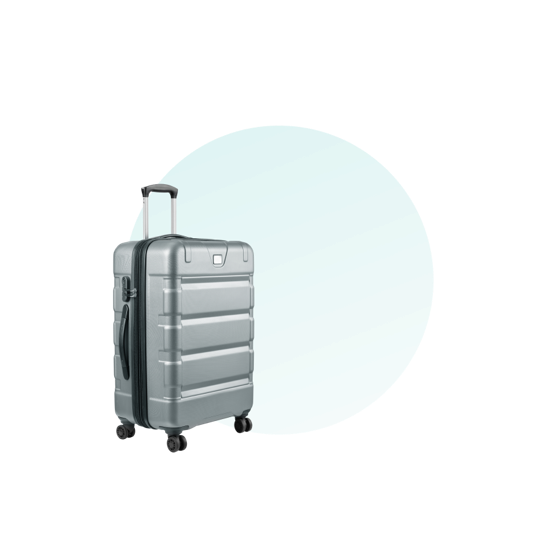
Carry-on baggage

  • Maximum size (L x W X H)

    56 cm x 23 cm x 36 cm 
    (22 in. X 9 in. X 14 in.) 

  • Examples include: 

    • Backpack 
    • Travel bag 
    • Suitcase  

    Carry-on bags must be light enough for you to place in the overhead bin without assistance.  

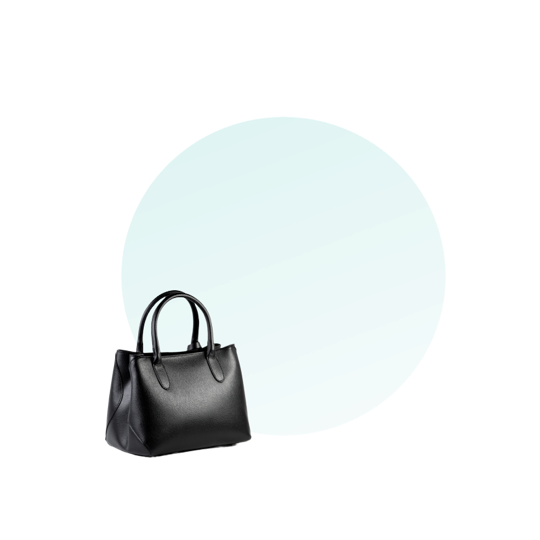
Personal item

  • Maximum size (L x W X H)

    41 cm x 15 cm x 33 cm 
    (16 in. X 6 in. X 13 in.) 

  • Examples include:

    • Purse or crossbody bag
    • Briefcase
    • Laptop bag
    • Camera
    • Small musical instrument
    • Sports ball
    • Pet in kennel

    Personal items must fit completely under the seat in front of you. 

UltraBasic carry-on allowance

Guests travelling on an UltraBasic fare may bring one personal item that fits under the seat in front of them.

A carry-on bag is only included when:

  • Travelling to or from Europe or Asia
  • Extended Comfort has been purchased for all flights in one direction of travel, including connections

Guests travelling on an UltraBasic fare who arrive at the gate with a carry-on bag that is not included as part of their itinerary will be required to check the bag and may be charged applicable checked baggage and service fees.


Carry-on baggage requirements

All carry-on bags and personal items must:

  • Fit within the maximum size limits, including wheels, handles, and pockets.
  • Be light enough for you to place in the overhead bin without assistance. Assistance is available upon request for guests requiring support.
  • Meet all security screening requirements at your departure airport.
  • Comply with regulations for all countries on your itinerary, as some items may be permitted in one country but restricted in another.

Before you travel, review our restricted and prohibited items page and check with your local security authority, such as CATSA, for information about liquids, gels, aerosols and other items that may be restricted or prohibited in carry-on baggage.

Prohibited onboard accessories

For safety reasons, unapproved devices cannot be attached to aircraft seats or other parts of the aircraft. Examples include: 

  • Knee defenders 
  • Unapproved seat belt extensions 
  • Booster seats 

Additional carry-on information

In the event space is not available on board for your carry-on item and it is required to be placed in checked baggage, or your existing checked baggage is delayed or damaged, we strongly recommend the following articles be packed in your personal item so they can travel with you in the cabin:

  • Identification
  • Travel documentation
  • Jewelry
  • Keys
  • Medication
  • Mobile devices
  • The Canadian Air Transport Security Authority (CATSA) regulates permitted and non-permitted items along with the size and packaging of all liquids, gels and aerosols through security. For more information on how to breeze through security visit catsa.gc.ca or call 1-800-O-Canada.

In addition to your fare’s carry-on bag and personal item allowance, the following items are also permitted: 

A diaper bag

  • Must contain items for an infant

An approved restraint system (car seat)

  • For use in a seat that has been purchased

Blood

  • Up to two litres of blood intended for personal use will be accepted as carry-on. Blood for non-personal use must be shipped as cargo.
  • Blood must be packaged in either plastic vials with screw-top lids taped shut, single-use vacuum collection tubes, or sealed plastic bags (preferably double-bagged).
  • As blood is handled as a perishable item, it must be packaged in a leak-proof container that is resistant to vibration or damage (such as a cardboard-enclosed StyrofoamTM box ice chest) with cold packs for cooling, and the container must then be single or double strapped with tape, string or elastic bands.
  • Airport security screening may request a letter issued by an authorized agency to confirm that the blood is non-infectious. Infectious blood samples are not accepted for transport.
  • If you are travelling internationally, it is your responsibility to confirm acceptance guidelines with customs at the destination country.

Cremated remains

  • WestJet Cargo offers support to transport cremated remains with care and confidence. Our experienced partners provide priority booking and handling, enhanced tender and retrieval times, live tracking, and access to an extensive domestic and international network. Please note that Cargo’s station network is different from WestJet’s flight network, so we’re unable to ship to every location. Learn more about how WestJet Cargo can support you during this time at westjetcargo.com.
  • Cremated remains are accepted in addition to carry-on and personal baggage allowance for all fare classes including UltraBasic. 
  • Up to 350 milliliters (mL) of cremated remains are accepted as carry-on baggage. If the volume is more than 350 mL, the cremated remains may be transported in checked baggage.
  • The Canadian Air Transport Security Authority recommends that cremated remains be transported in temporary containers (such as those made from plastic, cardboard or cloth) as these containers are more likely to scan clearly and pass security screening.  An empty permanent container made of stone, metal, or ceramic may be transported in carry-on or checked baggage. 
  • All carry-on items must go through security screening, documentation from a funeral home does not provide an exemption from screening. 
    • Screening officers are not permitted to open cremation containers and will not inspect the contents if you open it yourself. 
    • Containers that do not pass security screening will not be accepted as carry-on or checked baggage.  
  • Documentation is not specified but may be required depending on the guest's itinerary and destination. WestJet recommends the guest carry: 
    • Death certificate. 
    • Certificate of Cremation. 
    • If the remains are those of an animal, additional documentation from a veterinarian indicating the animal has been properly cremated. 
  • For information about transporting cremated remains to a specific destination, please review the local consulate website. 
  • For more information about travelling with cremated remains and meeting CTSA requirements, please see visit catsa.gc.ca

Duty free merchandise

  • Duty-free alcohol purchased after security is allowed as carry-on baggage on direct flights operated by WestJet aircraft. Alcohol must be checked on WestJet flights with transfers or connections, or when it is purchased before clearing security.
  • WestJet guests transferring from one of our airline partners originating in the European Union are permitted duty-free purchases as carry-on, providing the alcohol is packaged by the duty free vendor in a tamper-evident bag.
  • Duty free items must be consolidated with your fare’s carry-on bag and personal item allowance. Duty free is not allowable as an additional baggage item. 

Food items

  • Food items may be brought on board for consumption during the flight. Items not consumed will be considered part of your fare’s carry-on bag and personal item allowance. 

Fragile items

  • Delicate scientific instruments
  • Human organs for transplant

Medical devices

  • Approved battery-powered portable oxygen concentrators for personal use may be used inflight.
  • We may accept irregularly sized approved medical devices which exceed the carry-on baggage allowance, if the device can be stowed in an approved location without exceeding the weight limit for the most appropriate area in the aircraft, and it will not obstruct access to safety equipment, exits or the aisle. In all cases, acceptance of these items is at the sole discretion of WestJet.

Medical syringes or needles

  • Will only be accepted when accompanied with medication that is professionally/pharmaceutically labelled with the guest's name.

Medication

  • In the original labelled container

Mobility devices

  • Examples include braces, canes, crutches and walkers

Personal clothing items/outerwear

  • Coats, hats, umbrellas.

Personal electronic devices

Battery-powered personal electronic devices may be transported for personal use and may be used when permitted by the inflight crew. Examples include:

  • Air purifiers
  • Calculators
  • Cameras
  • Cordless noise filtering headsets
  • Electric watches
  • Entertainment systems
  • eReaders
  • Hearing aids
  • Heart pacemakers

Guests may transport but may not use the following personal electronic devices in the cabin:

  • Electronic cigarettes
  • Vaporizers

Stroller

Transmitting portable electronic devices

Battery-powered transmitting portable electronic devices may be taken in carry-on baggage, however because they transmit a signal, they must be set in "Airplane mode", which turns off the connectivity to cellular/mobile networks. You may use these in "Airplane mode" when advised by your inflight crew.

Some examples of a transmitting portable electronic device include:

  • Cellular phones
  • Entertainment/gaming devices
  • Tablets

Guests may take, but not use the following items in the cabin:

  • AM/FM transmitters and receivers
  • Remote-controlled toys, such as drones
  • CB radios
  • Portable two-way radio communication devices

Your kennel is considered your personal item in your carry-on baggage allowance.

Even though the turboprop is big on style, there is less space available for carry-on baggage. As such, you may be asked to check carry-on items even if they fit in the carry-on sizing device before you board the aircraft. If your carry-on items contain essential items such as medication, laptops, keys or fragile objects, please ensure these valuables travel with you in the cabin as carry-on items that are checked prior to boarding will not be available until after the aircraft has arrived and taxied to the terminal.


On board storage

Here are some guidelines for storing your carry-on baggage in the overhead bin, illustrated in a handy infographic. When in doubt, please defer to the judgment of the flight attendants.


Boeing 787 | Boeing 737 MAX

  1. Graphic of roller bag with arrow pointing upwards for overhead bin and laptop bag with arrow pointing downward for below seat

    Roller bags up top, laptop bags, purses, and crossbody bags below. 

  2. Graphic of roller bag being loaded on it's side into overhead bin wheels first and handle facing out

    Place roller bags in bin on their sides wheels first.

  3. Graphic of 4 roller bags on their sides in the overhead bin with wheels-side loaded first and handles facing out

    Stow four to six roller bags per bin door. Jackets go on top of roller bags, space permitting.


De Havilland Dash 8

  1. Graphic of roller bag with arrow pointing upwards for overhead bin and laptop bag with arrow pointing downward for below seat

    Roller bags up top, laptop bags, purses, and crossbody bags below. 

  2. Graphic of roller bag being loaded backside facing down into overhead bin in end to end position

    Place roller bags in bin horizontally end-to-end.

  3. Graphic of 2 roller bags backside facing down in the overhead bin loaded end to end

    Stow two roller bags per bin door. Jackets go on top of roller bags, space permitting.


Boeing 737 NG

  1. Graphic of roller bag with arrow pointing upwards for overhead bin and laptop bag with arrow pointing downward for below seat

    Roller bags up top, laptop bags, purses, and crossbody bags below. 

  2. Graphic of roller bag being loaded backside facing down into overhead bin wheels first

    Place roller bags flat in bin wheels first. 

  3. Graphic of 3 roller bags backside facing down in the overhead bin with wheels-side loaded first and handles facing out

    Stow three roller bags per bin door. Jackets go on top of roller bags, space permitting.