

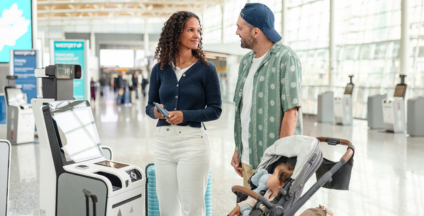


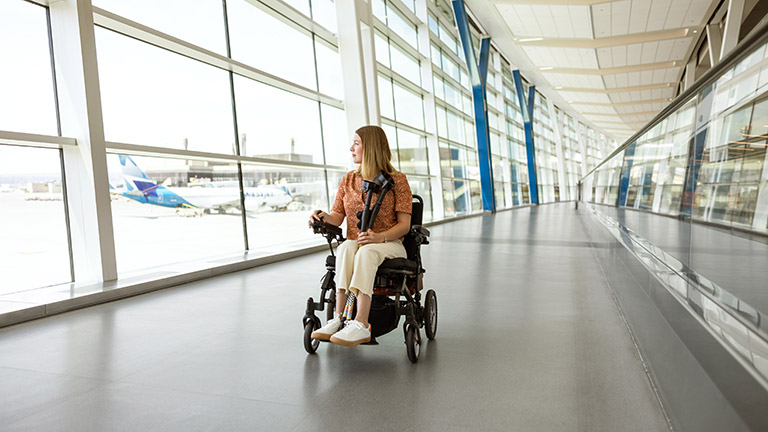
You can travel with your own wheelchair or personal mobility aid, such as a scooter, walker, crutches, or cane, free of charge, in addition to the checked baggage included with your fare.
To help us support you properly, please let us know:
- That you’re travelling with a wheelchair or mobility aid, and
- Whether you need mobility assistance at the airport or on board.
You can add or update this information when you book your trip, or later through Manage trips.
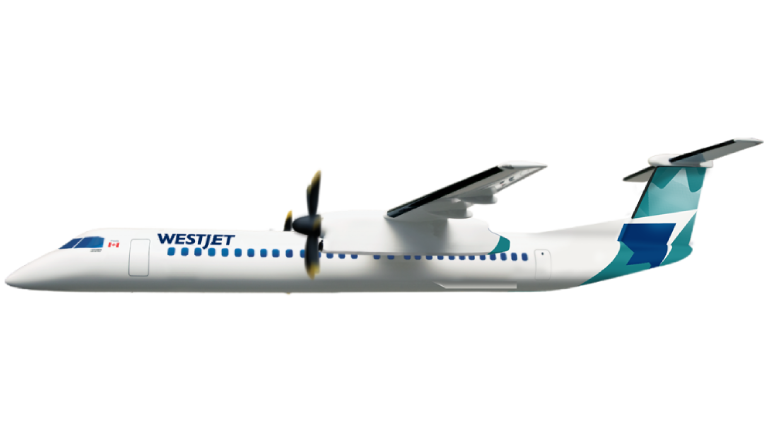
When adding mobility assistance, choose the option that best describes what support you need to move through the airport and on board. This helps our teams prepare the right support from check-in to arrival.
As part of this step, you’ll also be asked whether you’re travelling with your own wheelchair or mobility aid. You can select one of the following:
- a manual (non-powered) wheelchair or mobility aid, or
- a powered wheelchair or mobility device, such as a scooter, including battery details.
Providing both your assistance needs and device information allows us to handle your mobility aid safely and efficiently.
Check your device size and weight before you travel to make sure it can be safely transported. Each Aircraft has different limits for mobility devices.
If your device exceeds these limits, we won’t be able to transport it. For accurate measurements, measure your device with no one sitting in it.
- Maximum weight: 300 lb.
- Maximum Height: 59 in.
- Maximum Width: 51 in.
- Maximum weight: 300 lb.
- Maximum Height: 35 in.
- Maximum Width: 48 in.
- Maximum weight: 300 lb.
- Maximum Height: 45 in.
- Maximum Width: 40 in.
- Maximum weight: 500 lb.
- Maximum Height: 64 in.
- Maximum Width: 61 in.
On some flights, mobility devices are placed inside a container before loading into the cargo compartment. Container sizes may vary.
Batteries are regulated for air travel to ensure safety
We only accept batteries and battery-powered devices that are permitted and properly prepared for transport, including mobility aids.
- Confirm your battery type using your device manual or by contacting the manufacturer.
- Know whether your battery must stay attached, be disconnected, or be removed.
At check-in
We’ll verify that your battery meets air travel requirements, including:
- How many batteries are allowed,
- Whether batteries must be removed or disconnected,
- Whether removed batteries must travel in the cabin or as checked baggage, and
- How removed batteries must be packaged, including protecting battery terminals from contact with metal.
If your battery needs to be disconnected or removed, we can assist at the airport if you provide the manufacturer’s instructions and any required tools.
Please arrive at the airport at least 30 minutes before check-in cut-off time and visit the check-in counter.
This gives our agents time to:
- Review your mobility device details,
- Confirm battery requirements, and
- Prepare your device for transport.
If you have it, bring your device manual so we can confirm the size, weight, and battery information.
To help your wheelchair or mobility aid travel safely:
- You’re responsible for providing clear handling instructions for the disassembly and reassembly of the mobility aid, including identifying lifting points.
- Any parts that can’t be securely attached, such as footrests or cushions, should be removed and packed separately.
If you’re unable to disassemble or reassemble your device, you may travel with a support person who can assist.
Our airport teams will follow your instructions and take care when loading and unloading your device.
Powered wheelchairs and scooters travel in the aircraft’s cargo compartment. Size limits and battery requirements must be confirmed before traveling.
Devices are handled according to your instructions and secured for transport to reduce movement during loading and flight. It will not be tilted or placed on its side at any point during loading, transport, or unloading.
On the Boeing 787‑9 Dreamliner, up to two guest-owned folding wheelchairs may be stored in the cabin on a first-come, first-served basis (one per guest).
If cabin storage isn’t available, the wheelchair will travel in the cargo compartment.
On all other aircraft, manual wheelchairs travel in the cargo compartment.
Medically required aids, such as canes, walkers, or braces, are accepted free of charge.
- Devices that meet carry-on size limits may travel with you in the cabin.
- Devices that exceed carry-on limits are accepted as checked baggage.
Advance notice isn’t required for these items.
Wheelchair assistance on board
All WestJet aircraft are equipped with an onboard wheelchair to help you move between your seat and the washroom, when needed.
If your wheelchair or mobility aid is delayed or damaged while in our care:
- Speak with a WestJet agent as soon as possible, or
- Submit a delayed, lost, or damaged baggage report
- We’ll arrange temporary support at our expense and work to return or repair your device as quickly as we can.
If your mobility device can’t be repaired or is significantly delayed, we’ll make every reasonable effort to provide a comparable replacement.
This may be more challenging for highly customized devices or in some destinations.
If your device is delayed or damaged, we review every case to understand what happened and help prevent it in the future.
For more details, see our Tarrifs.
We’ll also reimburse reasonable expenses related to delays or damage.
If your wheelchair or scooter is delayed, damaged, or lost while travelling between Canada and the U.S., you can:
- speak with a WestJet agent, or
- submit a delayed or damaged baggage report.
You’re entitled to a temporary wheelchair or scooter while repairs or replacements are arranged. You may choose to use our repair vendor or your own.
If you need additional support, a Complaint Resolution Officer (CRO) is available. A WestJet agent can connect you with one, or you can call 1‑877‑495‑2276.