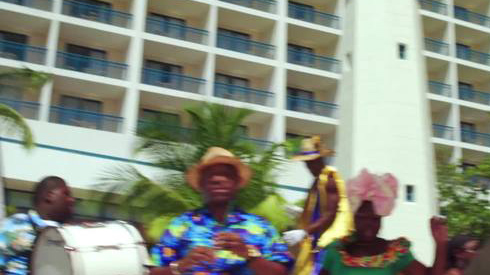
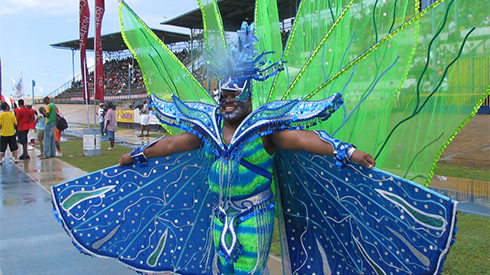
No event captures the true essence of Barbadian culture better than the annual Crop Over Festival, rooted in the days of 18th-century slavery. Crop Over marked the end of each year’s sugar cane harvest, when masters and slaves would both indulge in a colourful celebration of dance, rum and a hearty meal of rice and peas, salt fish, cassava and “pudding and souse” (a dish made of pork and sweet potato).
Today, Crop Over Festival celebrates the culture of a proud and independent nation, played out over a month of carnival-style events that kick off on the first Saturday in July. The celebrations of food and drink, arts and crafts, fetes and calypso tents continue until the first Monday in August, when costumed partygoers take to the streets to compete in the annual Kadooment Parade.
The Portuguese were the first Europeans to settle on the island in the 1500s. They called the island Los Barbados, in reference to its abundance of "bearded" fig trees (barbudo is Portuguese for bearded). However, the Portuguese soon hauled anchor, never to return, mainly due to the island's lack of natural resources.
English explorers arrived on Barbados in 1625 and began the only colonization Barbados has ever known. The island soon grew into one of the world's largest sugar producers. By the time slavery was abolished in 1834, the island's population was predominantly of African descent, as it remains today.
Since gaining independence from the U.K. in 1966, Barbados has grown into a model of political and social development, while maintaining strong ties to the traditions and institutions of the British system (Queen Elizabeth II remains its Head of State). And nowhere is the island's social development more evident than in the groups of smartly dressed, uniformed schoolchildren en route to schools, forming part of a nation that boasts one of the highest literacy rates in the world.
Today, the island's resident population of more than 257,000 includes a skilled labour force of over 126,000. Free education has contributed to a large middle class, significantly diminishing the gap between rich and poor. As a result, Barbados ranked third in 1996 in terms of quality of life, according to the United Nations Development Index.
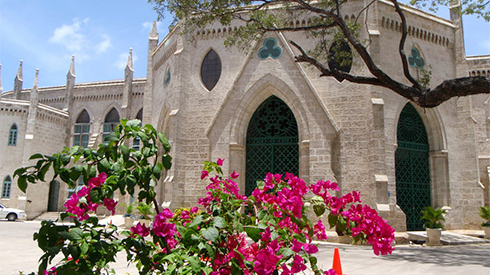
Barbadians are primarily Christian, encompassing more than 100 denominations who worship at more than 350 churches across the island. Interestingly, close to many churches and greatly outnumbering them, local rum shops serve as gathering points for Barbadians to talk about the politics of the day over a nip of one of the island's finest products.
While tourism has become the island's bread and butter, sugar and rum remain staples of the Barbadian economy, linking the island's past to its present in a very measurable way. The island's fishing industry is also an important way of life for generations of seafaring Barbadians.
From Christian values and calypso music, to its parliamentary system and polo grounds, a balanced mix of indigenous culture and colonial influences have helped shape the unique character of modern-day Barbadian life.